PFAS removal from water
Clean the carbon. Keep the carbon.
Fluorinse™ regenerates PFAS-loaded granular activated carbon (GAC) on site. The carbon goes back into service; the PFAS leaves as a small, concentrated waste.
>50% cost savings for a stationary or central regeneration system compared with conventional GAC replacement system for a 2.4 MGD (379 m³/h) system, based on a cost model developed with a utility partner.
For a mobile system, savings are potentially greater than 70%.
Where Fluorinse™ fits among PFAS treatments
Destroy it, capture it with better adsorbents, separate it into a concentrate, or make the GAC utilities already run much cheaper. Fluorinse™ takes the fourth path. Compare the options
Today, the carbon leaves the site every time
When PFAS breaks through, tonnes of spent carbon are hauled away, reactivated or landfilled, and replaced. Each disposal route risks releasing PFAS again. See today's GAC cycle
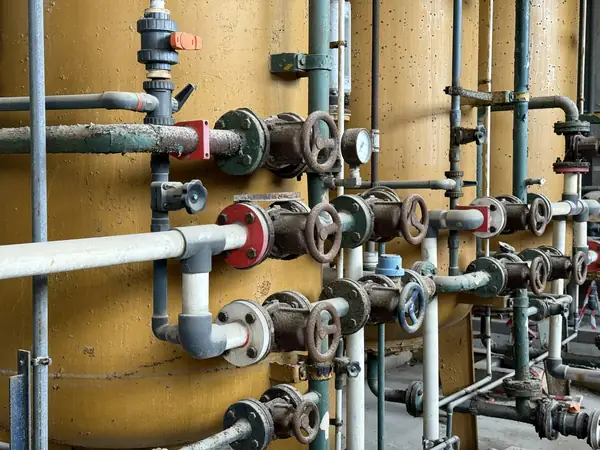
How it works
- PFAS collect on the GAC, as in any GAC system.
- A Fluorinse™ fluid draws the PFAS off the carbon.
- The PFAS are flushed out of the bed.
- Outside the bed, the PFAS form clusters.
- Filters capture the clusters before the fluid is reused.
Why it matters
Cost
Greater than 50% cost savings for a stationary or central system vs conventional GAC.
Waste volume
PFAS leaves in filters. The volume to destroy is orders of magnitude smaller.
Carbon footprint
An estimated 90–99% lower footprint.
Mobile system concept
A mobile unit regenerates the carbon at the customer's site, and the same carbon goes back into service. The rendering below is a concept, not yet a commercial service.

Fluorinse™ complements, rather than competes with, emerging PFAS destruction technologies: it gives them far less to destroy.
- Less than 8 hours on site overall.
- Only the filters leave All PFAS is caught in filters, cleaned or destroyed on site, on a trailer or at a central plant.
- Site water only reused step to step and, in many cases, discharged locally.
- Low media loss from slurry loading and a fluidized-bed process.
- Familiar service much like a change-out today.
Source: IonicH2O system concept and estimates.