Technology

From the PFAS problem to clean, reusable carbon

Today's options, and how Fluorinse™ regenerates granular activated carbon (GAC) where it sits.

On this page: Options · Today's cycle · How it works · Capacity · The loop · Model · Mobile

Treatment options

Where Fluorinse™ fits among PFAS treatments

EPA named GAC, anion exchange, reverse osmosis and nanofiltration as best available technologies; GAC is the most studied.
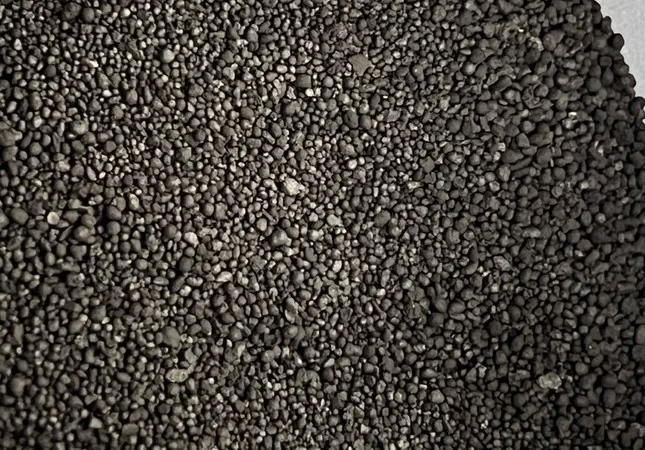
Close-up of black granular activated carbon.
Activated carbon (GAC). Photo: IonicH2O.
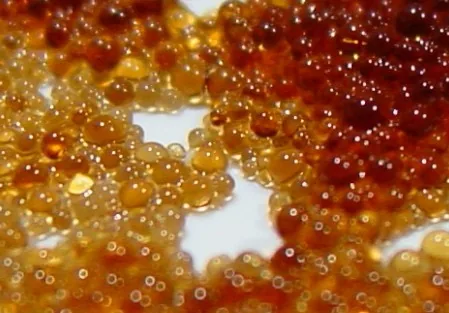
Close-up of amber and orange ion-exchange resin beads.
IX resin beads. Photo: Wikimedia Commons, public domain.

Four paths: our assessment

Four paths: IonicH2O assessmentDot ratings from three (high) to one (low) for time to market, development cost, technical risk and barrier to entry. Destroy it: 3, 3, 3, 3. Better adsorbents: 3, 2, 2, 3. Separate and concentrate: 2, 2, 2, 3. Make the incumbent cheaper (Fluorinse™): 1, 1, 1, 1.Timeto marketDevelopmentcostTechnicalriskBarrierto entry1 Destroy itUsually fed a concentrate from a separation step2 Better adsorbentsNew adsorbent materials under research3 Separate & concentrateRO / NF, foam fractionation; PFAS leave in a concentrate4 Make the incumbent cheaperRegenerate spent GAC in place: Fluorinse™

●●● high, ●○○ low; fewer dots is better. Our judgment as a small company, not data; it rates the business path, not the science.

TechnologyHow it worksCost per m³ of contaminated water
GAC with Fluorinse™GAC adsorbs PFAS and is regenerated on site.~50–70% less than conventional GAC
Conventional GACGAC adsorbs PFAS, then is replaced and destroyed off site.$0.05–$0.23
Liquid-liquid separationSeparates solutions to extract PFAS.$0.06–$0.82
CoagulationForms solids directly from impacted water.>$1.00

Source: IonicH2O internal market analysis.

Sources: US EPA, 89 FR 32532 (2024); EPA treatment options fact sheet.

Treatment options

Today's GAC cycle: load, haul, replace

Today's GAC cycleGAC loads until breakthrough, is changed out, and the spent carbon is discarded. LoadBreakthroughPFAS reach the outletChange-outCarbon trucked awayDiscardReactivate or landfill

EPA notes each disposal route carries some risk of releasing PFAS again. One 20,000 lb tank means new media, two truck trips and disposal. Per-tank costs

Source: US EPA, Interim Guidance on the Destruction and Disposal of PFAS.

How Fluorinse™ works

Tipping the balance

PFAS constantly trades places between carbon and water. In service the balance favors the carbon. During regeneration, Fluorinse™ tips it the other way: PFAS leaves the carbon for the fluid, where it is collected and filtered out.

Tipping the balancePFAS moves between the carbon surface and the surrounding fluid. In service the balance favors the carbon; during regeneration it is tipped toward the fluid. On the carbonin service: PFAS held here In the fluidduring regeneration: PFAS moves here regeneration favors this directionre-adsorption, kept small

How Fluorinse™ works

Why removal keeps going

Adsorption and desorptionAdsorption needs PFAS in the fluid and a free site; desorption depends only on what is on the carbon. Adsorptionneeds PFAS in fluid + free siteDesorptiondepends only on the carbonKeep fluid cleanremove PFAS as it comes off

Desorption is fast and continues until the fluid is saturated. The fluid then moves away from the GAC to be agglomerated and filtered, and the renewed fluid returns to the GAC for more desorption.

How Fluorinse™ works

One closed loop

The fluid circulates through the carbon bed and a filter train; only concentrated PFAS leaves the loop.
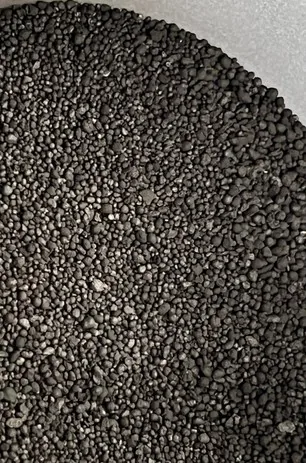
Spent granular activated carbon.
Spent GAC stays in its vessel.
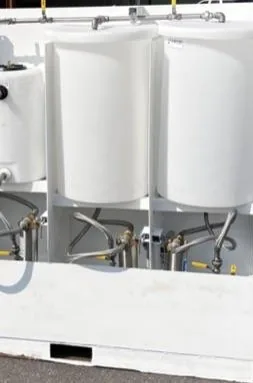
White regeneration fluid tanks on a skid.
Regeneration fluid, recirculated.
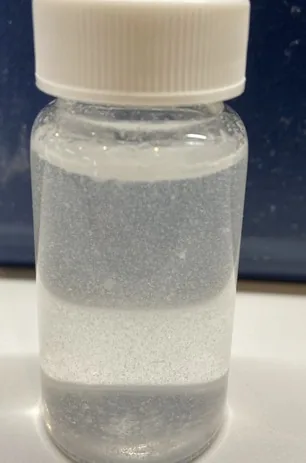
Lab vial with fine white particles suspended in clear liquid.
Agglomerate (lab sample).
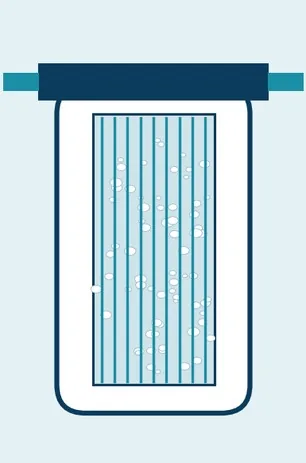
Drawing of a cartridge filter with captured particles.
Filters capture the agglomerates.
The Fluorinse™ loopDesorb, flush, agglomerate, filter, recirculate; concentrated PFAS leaves the loop for destruction. DesorbPFAS releasedFlushout of the bedAgglomeratePFAS clusterFilterclusters capturedRecirculateclean fluid returnsContinuous recirculation through the bed and the filter train

The regeneration fluids are designed to be non-toxic and environmentally benign.

Traditional GAC

Spent carbon is hauled off, destroyed or reactivated, and replaced.

GAC with Fluorinse™

Regenerated on site for about 10 years of use before replacement. PFAS leave in filters.

Bringing it to the site

Mobile system concept

A mobile unit regenerates the carbon at the customer's site, and the same carbon goes back into service. The rendering below is a concept, not yet a commercial service.

Concept illustration of a mobile regeneration unit: a red trailer-mounted tank with a skid of stainless-steel filter vessels, a pump and a control cabinet.
Concept illustration of the mobile system.
Mobile system conceptA truck brings an empty tank to the site. Spent carbon moves from the customer's GAC vessel into the tank as a slurry, is regenerated on site and returns to the vessel. Filters holding concentrated PFAS are the only waste that leaves. Mobile tankarrives empty Customer GAC vessel GAC bed spent GAC out as slurry regenerated GAC back in Filters concentrated PFAS leaves in filters,for disposal or destruction no new media delivered;site water used and reused

See mobile-system estimates · See capacity results · See regeneration model